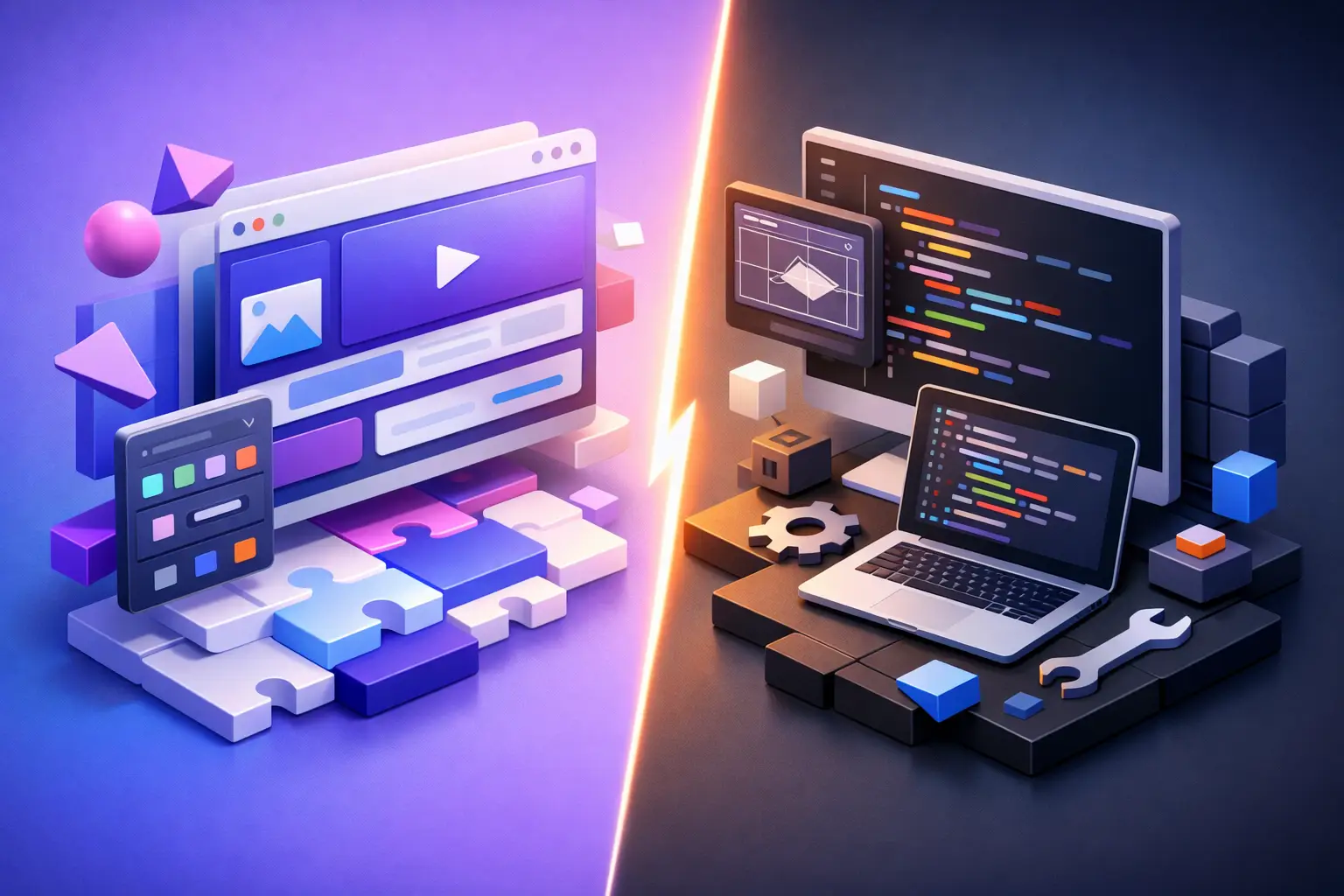
Framer vs Custom Development: Which Wins?
Framer vs custom development comes down to speed, flexibility, and growth. Learn which option fits your site, budget, and business goals.
A fast launch feels great until your website starts getting in the way of growth. That is where the framer vs custom development decision gets real. For a business owner, this is not a design preference. It is a revenue decision that affects speed to market, lead generation, scalability, and how much control you actually have when your business needs change.
Some companies need a polished site live in days. Others need deeper integrations, custom workflows, advanced SEO control, or a platform that can support aggressive digital growth over time. Both paths can work. The right choice depends on what the website is supposed to do for the business.
Framer vs custom development: the real difference
Framer is a modern visual website builder built for speed, design flexibility, and fast publishing. It is a strong option for marketing sites, landing pages, startup websites, and brands that want a clean online presence without a long build cycle. You can move quickly, make updates without heavy developer involvement, and get something visually sharp into market fast.
Custom development is different. It means building a website or web experience around your exact business requirements, usually with a framework like Next.js and a more tailored backend setup. Instead of working inside the boundaries of a platform, you define the architecture, features, integrations, content model, and performance strategy based on your goals.
That is the core split. Framer helps you launch fast within a strong visual system. Custom development gives you more control when the business needs something beyond a standard marketing site.
When Framer is the smarter business move
Framer makes sense when speed matters more than deep technical customization. If you are launching a new brand, testing an offer, promoting a service line, or replacing an outdated brochure site, Framer can be a very efficient choice. It gets you to market quickly and gives your team a way to manage content and pages without a complicated workflow.
For many small and mid-sized businesses, that is enough. If your website’s main job is to present the brand clearly, explain services, build trust, and generate leads through contact forms or calls, Framer can absolutely do the job. In many cases, it does it faster and at a lower upfront cost than a custom build.
It also works well for teams that care heavily about visual polish. Framer gives designers more freedom than many traditional site builders, and that often leads to stronger first impressions. If brand perception is a big part of your growth strategy, that matters.
But there is a ceiling. Framer is excellent at what it is built for. Problems start when businesses expect it to function like a fully custom application or a deeply integrated content and marketing system.
Where Framer can start to feel limiting
The limits usually show up as the business matures. Maybe you need custom logic tied to lead routing. Maybe you want a gated content experience, advanced calculators, multilingual content structures, CRM-specific workflows, or more control over how your data moves through the site. Maybe your SEO strategy requires technical configurations that go beyond what is comfortable in a visual platform.
At that point, what felt fast at the beginning can become restrictive. Workarounds start stacking up. External tools fill the gaps. The site may still look great, but your marketing team and operations team begin working around the platform instead of through it.
That does not mean Framer is weak. It means it is specialized. And if your business is building momentum, specialized tools can become limiting faster than expected.
When custom development is the stronger long-term play
Custom development is the right move when the website is not just a digital brochure. If it is a growth engine, a lead pipeline tool, a content platform, a web app foundation, or a key operational asset, custom is often the smarter investment.
With custom development, you can shape the site around the business instead of shaping the business around the platform. That matters when you need advanced integrations, custom page logic, unique user flows, high-performance architecture, or a content system built around how your team actually works.
This is especially relevant for businesses with complex services, multiple markets, large content footprints, or a serious SEO strategy. If organic search is a major acquisition channel, technical control can create a meaningful advantage. The same goes for companies running paid traffic at scale. If you are investing heavily in advertising, your landing page performance, speed, tracking accuracy, and testing flexibility have a direct impact on ROI.
Custom development also gives you more ownership over the future. You are not boxed into a single platform’s roadmap. You can evolve the website as the business changes, whether that means adding automation, connecting internal systems, expanding into new markets, or creating more advanced digital experiences.
Why custom is not always the first move
Custom development takes more planning, more budget, and more clarity. If your offer is still shifting, your messaging is not dialed in, or you need a site live immediately, a custom build may be more than you need right now. A lot of businesses do not fail because they launched with a simpler platform. They fail because they waited too long to launch anything at all.
That is why this decision should be tied to business stage, not ego. A company does not need custom code just to say it has custom code. It needs the right level of technology for the current goal and the next stage of growth.
Cost, speed, and ROI
This is where most decisions get made, and where many get made badly.
Framer usually wins on speed and lower initial cost. You can get a professional site up faster, iterate quickly, and start using it as a sales and marketing asset without a long production cycle. For businesses that need momentum now, that can produce a faster return.
Custom development usually wins on long-term fit and deeper ROI when the website plays a bigger role in lead generation, customer experience, content operations, or system integration. The upfront investment is higher, but so is the upside if the site is central to how the business acquires and converts demand.
The mistake is comparing only the build cost. The better question is this: what will the website need to support over the next 12 to 24 months? If your answer includes scale, automation, advanced SEO, custom features, or operational complexity, a cheaper short-term choice can become more expensive later.
Framer vs custom development for marketing performance
From a marketing perspective, both options can perform well if they are implemented correctly. A bad custom site will lose to a well-executed Framer site every time. But if two strong teams build each one properly, custom development usually gives marketers more control.
That control matters in page speed tuning, analytics implementation, structured content, experimentation, and integration with ad platforms, CRMs, and automation tools. It also matters when you want to create conversion-focused experiences that are not constrained by a platform’s default patterns.
Framer still has a strong role in performance marketing, especially for campaign pages, service pages, and lean websites that need to launch quickly and look sharp. If your strategy depends on speed of execution and frequent design changes, it can be an efficient tool.
The difference is depth. Framer is strong for fast deployment. Custom is stronger when marketing performance depends on tailored infrastructure.
How to choose without overcomplicating it
If your business needs a high-quality website quickly, your requirements are relatively straightforward, and your main goal is to establish credibility and capture leads, Framer is often the right call.
If your website needs to support deeper functionality, integrate with your tech stack, scale with aggressive marketing, or become a core business asset, custom development is usually the better path.
There is also a middle ground. Some businesses start with Framer to move fast, validate positioning, and create immediate presence, then shift to custom development when the growth strategy becomes more demanding. That path can make a lot of sense if it is planned intentionally instead of treated as a rebuild caused by poor foresight.
The strongest digital strategies are not built around trends. They are built around fit. At BearSolutions, that is how we look at modern web decisions - not as a platform debate, but as a business growth decision tied to where you are now and where you want to go next.
The right website should not just look current. It should give your business room to win bigger six months from now than it does today.