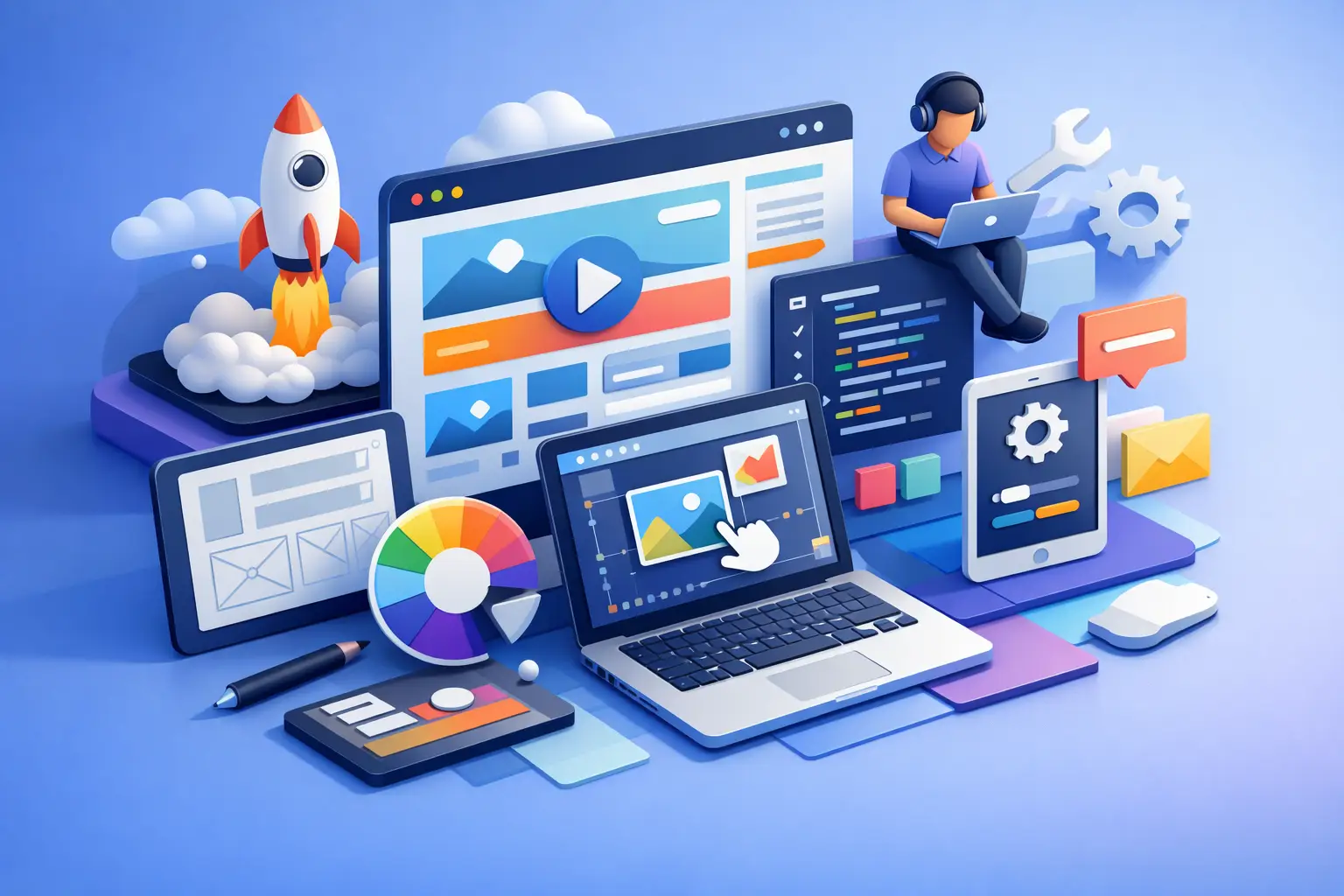
What Is Web Design and Development?
What is web design and development? Learn how design and development work together to build websites that attract traffic and drive leads.
A website can look polished and still fail to generate leads. It can also load fast and still look untrustworthy. That gap is exactly why businesses ask, what is web design and development, and why does it matter so much to growth? The short answer is this: web design shapes how your brand is seen and experienced, while web development makes that experience work properly across devices, browsers, and user actions.
If you want your website to do more than just exist, you need both. Design without development creates a pretty shell. Development without design creates a tool people may not want to use. When those two disciplines are aligned, your website becomes a business asset that supports visibility, credibility, lead generation, and conversion.
What is web design and development in simple terms?
Web design and development is the process of planning, creating, and maintaining a website so it looks right, functions properly, and supports business goals. Design covers the visual side and user experience. Development handles the code, structure, performance, and integrations that make the site actually run.
Think of it this way. Web design decides what visitors see, how pages are organized, and how easy the site is to use. Web development turns those ideas into a functioning website that loads quickly, responds well on mobile, connects to forms, tracks data, and supports future growth.
For a business owner, the distinction matters because websites are no longer digital brochures. They are often your first salesperson, your credibility check, your lead capture system, and the foundation of your digital marketing. If your site is weak in any one of those areas, the impact reaches far beyond aesthetics.
Web design is about perception, trust, and action
Web design is not just about making a site look modern. It is about guiding attention and removing friction. Good design helps visitors understand who you are, what you offer, and what they should do next. That could mean booking a call, requesting a quote, making a purchase, or reading more about your services.
A strong design system includes layout, typography, color, spacing, imagery, navigation, and calls to action. But the real goal is performance. A well-designed page should make the next step obvious. It should support your brand, reduce confusion, and build trust quickly.
This is where many businesses get stuck. They invest in design trends instead of business outcomes. A flashy homepage might win compliments, but if the messaging is unclear or the mobile experience is poor, it will not help you compete. Good web design balances brand presentation with usability and conversion.
Web development is what makes the website perform
If design is the storefront, development is the infrastructure behind it. Web development takes the approved designs and builds the actual website using code, frameworks, content systems, APIs, databases, and hosting environments.
Development usually includes front-end work and back-end work. Front-end development controls what users interact with in the browser, including page structure, animations, buttons, forms, and responsiveness. Back-end development handles the server-side logic, content management, databases, user authentication, and system connections.
This side of the process affects much more than functionality. It also impacts speed, search visibility, scalability, and security. A slow site can hurt conversions. A clunky content setup can make updates difficult. Weak technical structure can limit what your marketing team can track and optimize.
That is why serious website projects should not be treated like one-time visual exercises. The technical build matters just as much as the brand presentation. Modern tools like Next.js, headless platforms, and flexible content systems can create faster, more scalable websites, but only if they are selected and implemented with a clear strategy.
Why web design and development need to work together
The best websites are not created in silos. Design decisions affect development requirements, and development choices affect design possibilities. If one side leads without the other, the final product usually suffers.
For example, a designer may propose interactive elements that look impressive but create performance issues if developed poorly. On the other side, a developer may build a technically solid site that feels generic and fails to reflect the business brand. Neither approach is enough if the goal is growth.
When design and development work together from the start, the website becomes more efficient to build and more effective after launch. Messaging, UX, speed, SEO foundations, analytics, and conversion paths can all be planned as one system instead of stitched together later.
For businesses trying to dominate online, this matters. Your website should not only look credible. It should support paid traffic, organic discovery, lead tracking, CRM workflows, and ongoing optimization. That level of performance requires alignment between creative and technical execution.
What a business website actually needs to succeed
Not every business needs a complex custom platform. But every serious business does need a website that can support growth. That usually means getting the fundamentals right before adding extra features.
A successful website needs clear positioning, strong page structure, mobile responsiveness, fast load times, search-friendly architecture, and conversion-focused calls to action. It also needs the technical flexibility to connect with tools like analytics platforms, ad tracking, automations, forms, CRMs, and content systems.
This is where trade-offs come in. A simple brochure-style site can be faster to launch and more affordable, but it may limit content growth or future integrations. A more advanced custom build can create stronger long-term value, but it requires better planning and investment. The right choice depends on your business model, sales cycle, traffic strategy, and internal capacity.
That is why the question is not just what is web design and development. It is also what kind of website does your business need to compete effectively?
What is web design and development for marketing performance?
From a marketing perspective, web design and development should create a site that turns traffic into action. That means every page should support discovery, trust, and conversion.
If you are running SEO campaigns, your site structure, page speed, content templates, and internal organization all matter. If you are investing in paid ads, landing page clarity, mobile UX, and form performance become critical. If your sales process depends on consultations or quote requests, your website needs to qualify interest and reduce drop-off.
A website is not separate from marketing. It is the platform your marketing depends on. Weak design can lower trust. Weak development can break tracking or slow the site down. Both reduce return on ad spend and limit organic growth.
This is why many businesses outgrow fragmented vendors. One team handles branding, another builds the site, another runs ads, and no one owns performance end to end. A more effective model connects web design, web development, and marketing strategy under one direction so the website supports the full customer journey.
Common misconceptions that cost businesses money
One common mistake is assuming web design and development are interchangeable. They are connected, but they are not the same job. Hiring for one without understanding the other often creates gaps in quality and performance.
Another mistake is thinking a website launch is the finish line. In reality, launch is where the real testing begins. User behavior, campaign traffic, search performance, and conversion data all reveal what needs improvement. The strongest websites evolve over time.
A third mistake is choosing the cheapest option without considering long-term cost. A low-cost build may save money upfront, but if it is hard to edit, poorly structured, or unable to support marketing, it can become expensive fast. Rebuilding too soon is one of the most common website problems small and mid-sized businesses face.
How to evaluate whether your current site is doing its job
If your website gets traffic but not leads, design and messaging may be the issue. If users complain about speed or mobile usability, development may be the issue. If your team struggles to update content or launch landing pages, the platform setup may be the issue.
Ask direct questions. Does your site clearly explain your value? Does it look credible compared to stronger competitors? Is it easy to use on mobile? Does it load quickly? Can it support SEO, ads, analytics, and future integrations? Can your team manage it without constant friction?
If the answer is no to several of those questions, your site is likely holding back growth.
At BearSolutions, we see this often. Businesses do not just need a nicer website. They need a stronger digital engine - one built with strategy, modern technology, and a clear path to revenue.
A good website should give your business momentum. If your current one is slow, outdated, hard to manage, or failing to convert, that is not a design issue alone or a development issue alone. It is a growth issue, and fixing it starts with building both sides the right way.