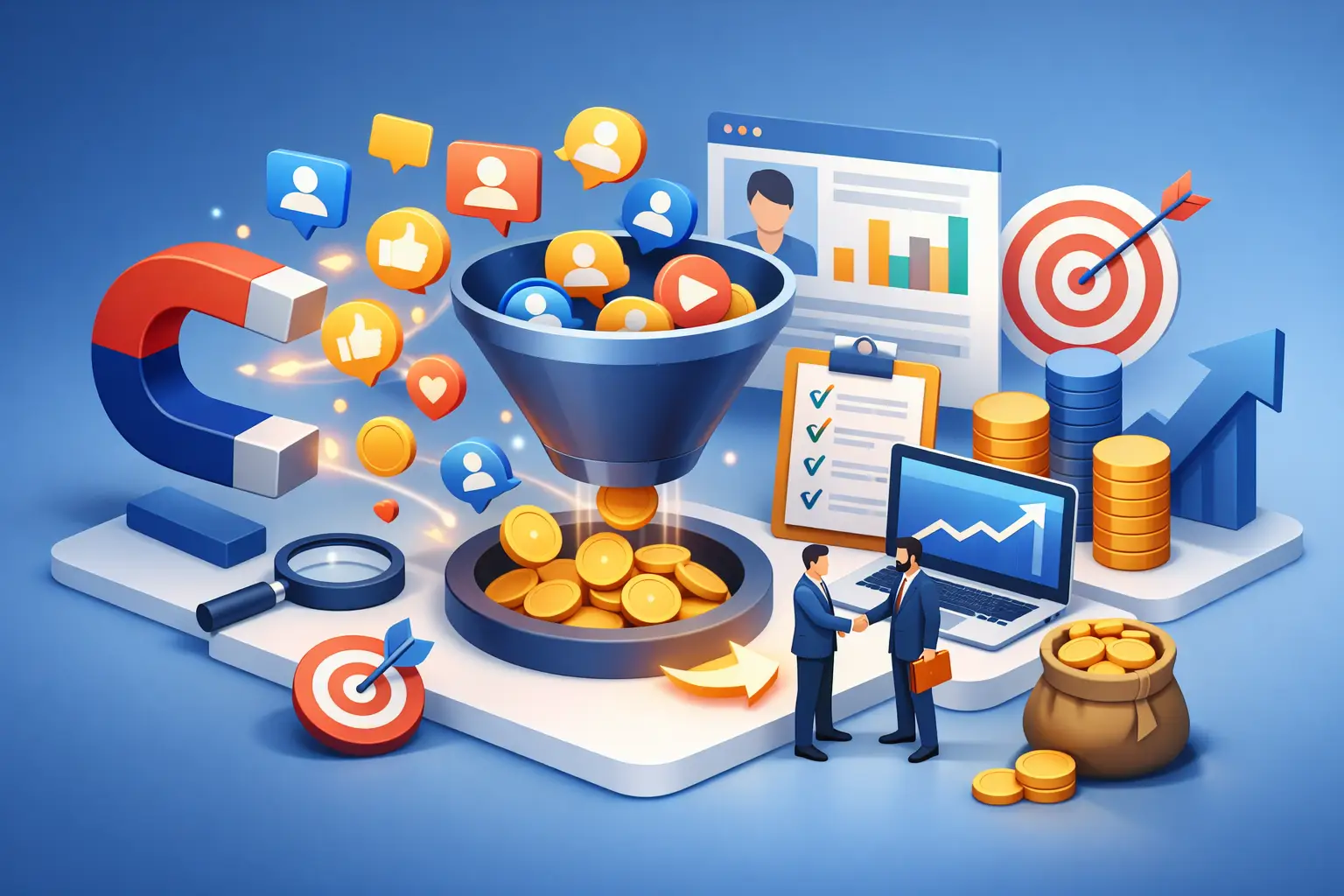
How to Generate Qualified Leads That Convert
Learn how to generate qualified leads with a smarter mix of website strategy, ads, content, and automation that turns traffic into sales.
Most businesses do not have a lead problem. They have a quality problem. Traffic shows up, forms get filled out, calls come in - but too many of those contacts are not ready to buy, cannot afford the service, or were never a fit in the first place. If you want to know how to generate qualified leads, the answer is not simply getting more attention. It is building a system that attracts the right buyers and filters out the wrong ones.
That shift matters because bad leads waste more than ad budget. They drain sales time, distort reporting, and make marketing look weaker than it really is. Qualified lead generation is about precision. The goal is to create demand from the people most likely to become revenue.
What qualified leads actually mean
A qualified lead is not just someone who clicked an ad or downloaded a guide. It is someone who matches your target customer, has a real problem you can solve, and shows intent strong enough to justify sales follow-up.
For one business, that might mean a local service buyer who needs help this month. For another, it might be a B2B decision-maker researching vendors for a six-figure project. The definition changes by company, but the principle stays the same: qualification sits at the intersection of fit and intent.
If you skip that definition, every campaign gets harder. Your website speaks too broadly. Your ads attract the wrong audience. Your sales team chases noise. Before you scale anything, get clear on who counts as a qualified lead in your business.
How to generate qualified leads starts with targeting
Lead quality is usually won or lost before someone ever lands on your website. If your targeting is weak, your pipeline will be weak too.
Start with your best customers, not your average ones. Look at the clients who close fastest, stay longest, spend more, or generate the fewest service issues. What industry are they in? What size is their business? What triggered their purchase? What objections did they have before signing?
That analysis gives you a real-world ideal customer profile. From there, your messaging becomes sharper because it speaks to a specific buyer with a specific problem. This is where many companies stall. They market to everyone who could buy instead of the narrower group most likely to buy.
That broader approach can increase top-of-funnel volume, but it usually lowers close rates. If you are working with limited budget, tighter targeting often beats wider reach.
Your website should qualify visitors, not just welcome them
A lot of websites are built to look credible but not to convert intelligently. They say just enough to sound professional, but not enough to help buyers self-select.
A stronger site does both jobs at once. It builds trust and it filters. That means being clear about who you serve, what you do best, what problems you solve, and what type of engagement makes sense.
If your pricing starts at a certain level, say so. If you specialize in a certain market, make that obvious. If your process is built for serious buyers, your copy should reflect that. Clarity may reduce raw inquiries, but it usually improves lead quality.
This is also where technology matters. Fast load times, mobile performance, conversion-focused page structure, CRM integrations, and clean form logic are not just technical details. They shape who converts and how that data gets routed. A modern lead generation system is part messaging, part infrastructure.
The best channels depend on buyer intent
There is no single best channel for qualified lead generation. There is only the best channel for your sales cycle, buying behavior, and deal size.
Search campaigns often perform well when intent is already high. If someone is actively searching for a service, that traffic can convert quickly. The trade-off is cost. Competitive terms are expensive, and weak landing pages will burn budget fast.
Paid social can work well when your offer is strong and your targeting is disciplined. It is especially useful for creating demand, retargeting warm audiences, or reaching decision-makers before they start searching. But social usually needs stronger creative and better follow-up because the buyer may not be ready at first touch.
SEO and content marketing tend to produce strong long-term returns, especially for service businesses with complex sales. When done well, they attract prospects already researching solutions and build authority before the sales conversation starts. The trade-off is speed. This channel compounds over time, but it rarely delivers immediate scale.
Email and outbound still have a place, especially in B2B. But they only produce qualified leads when the list quality, offer, and follow-up are all strong. Generic outbound at volume may create activity, but not much revenue.
Content should pre-sell, not just educate
Content is often treated as a traffic play. That misses the bigger opportunity. Good content does not just bring people in. It moves them closer to action.
If your audience is evaluating solutions, your content should answer the questions that slow deals down. Cost expectations, implementation timelines, service differences, platform choices, and common mistakes all matter. The more directly you address buying friction, the more qualified your inbound leads become.
That does not mean every article needs to read like a sales page. It means your content should attract informed buyers, not casual browsers. A business owner searching for answers is valuable. A business owner who finishes your content with a clearer understanding of why your approach fits their needs is far more valuable.
Use forms and funnels to improve lead quality
If every lead enters your pipeline the same way, your team is doing too much sorting manually. Better funnel design can improve quality before a salesperson ever gets involved.
This is one place where many companies hesitate because they fear friction. They shorten forms, strip out qualifying questions, and remove context in hopes of increasing conversions. Sometimes that works. More often, it creates more low-intent leads.
The better approach is selective friction. Ask the questions that matter. Budget range, project scope, timeline, service need, or company size can help separate real opportunities from weak fits. You do not need to turn every form into an application, but you do need enough signal to route leads properly.
Automation helps here. CRM workflows, scoring models, and lead routing logic can turn a messy intake process into a system. High-intent leads can be prioritized. Low-fit inquiries can be nurtured or filtered out. This is where marketing and technology should work together, not in separate lanes.
How to generate qualified leads with better follow-up
Even strong leads go cold when follow-up is slow or inconsistent. Speed matters, but relevance matters too.
A lead who requested a quote should not get the same response as someone who downloaded a resource. A local buyer with urgent need should not wait behind a general inquiry. Qualification is not just about acquisition. It continues through response time, sales process, and nurturing.
This is where a lot of businesses leak revenue. They invest in ads, content, and web design, then rely on manual follow-up that varies by day, workload, or salesperson. A better system uses automation to respond immediately, capture key data, assign next steps, and keep the lead moving.
The companies that dominate online usually do not win because they have the flashiest campaigns. They win because their full pipeline is connected, from first click to booked call to closed deal.
Measure what actually signals quality
If you only track lead volume, you will make bad decisions. High volume can hide poor fit. Cheap leads can become expensive when sales time is wasted.
Track metrics that reflect business value. Look at qualified lead rate, cost per qualified lead, sales acceptance rate, close rate by source, and revenue by channel. That tells you which campaigns attract buyers, not just clicks.
It is also worth reviewing quality by landing page, ad message, and offer type. Sometimes the issue is not the channel. It is the promise. If your campaign speaks too broadly, you will attract too broadly.
For growing businesses, this is where an integrated approach matters. When your site, campaigns, data, and automation all feed into one strategy, optimization gets faster. You stop guessing and start seeing where qualified demand is really coming from.
BearSolutions Marketing & Technology approaches lead generation with that full-stack mindset because growth rarely comes from one tactic alone. It comes from building a connected system designed to attract, qualify, and convert.
The real advantage is alignment
The businesses that consistently generate qualified leads are rarely doing something mysterious. They are aligned. Their targeting matches their offer. Their website matches buyer intent. Their campaigns match the sales process. Their technology supports follow-up instead of slowing it down.
That is the real answer to how to generate qualified leads. Build a system that earns attention from the right audience, gives them a clear path to act, and qualifies them before your team spends time chasing the wrong opportunities.
If your lead flow feels inconsistent, the fix is usually not more noise. It is better alignment between strategy, messaging, technology, and execution. Get that right, and lead generation stops feeling random. It starts becoming a growth engine.