What Is Web Design and Why It Matters
What is web design? Learn how it shapes trust, user experience, conversions, and growth for businesses that want stronger online performance.
A prospect lands on your website and decides in seconds whether your business feels credible, current, and worth contacting. That moment is where what is web design stops being a basic question and becomes a revenue question.
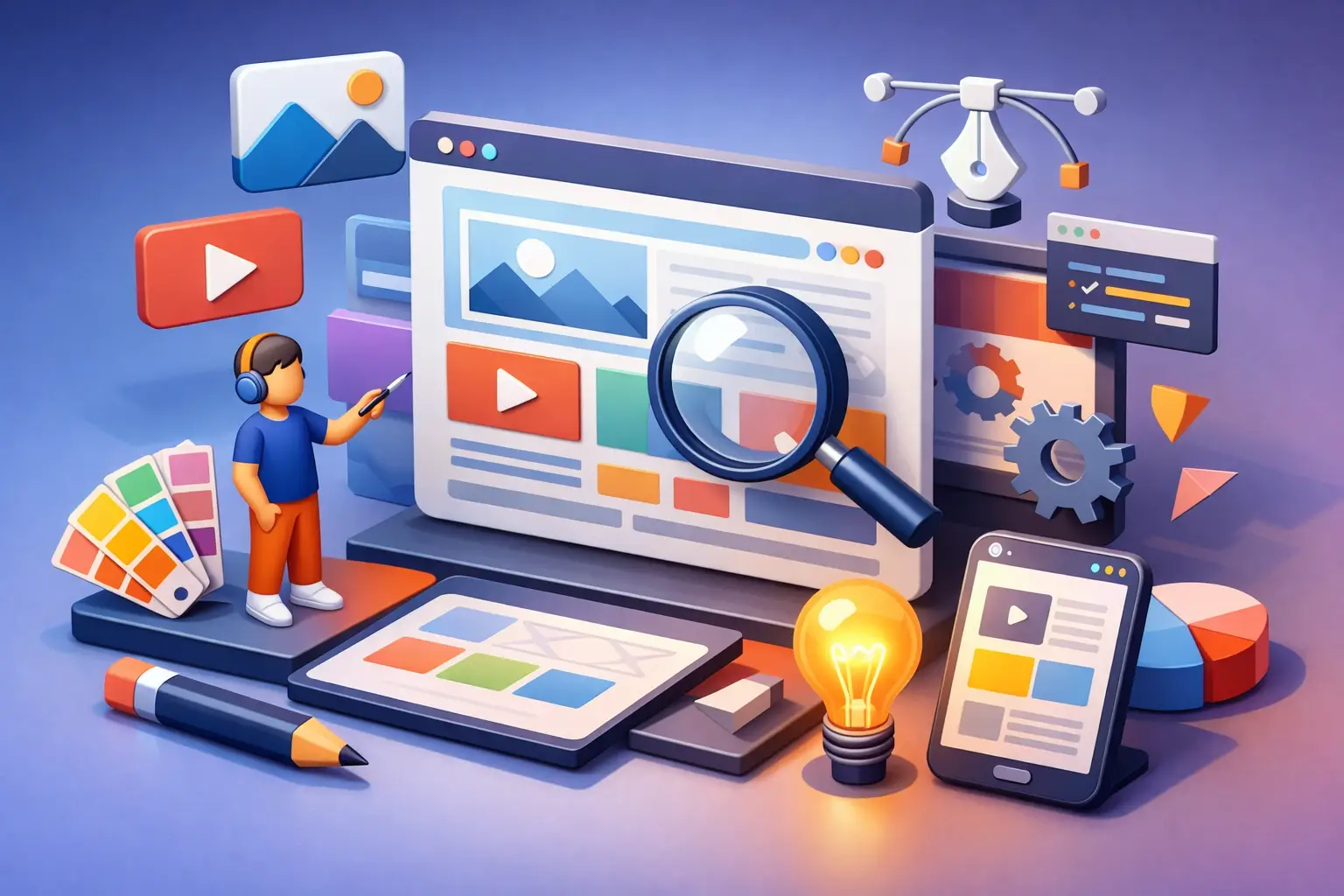
Web design is the process of planning and creating the visual layout, structure, and user experience of a website. It covers how a site looks, how pages are organized, how users move through it, and how clearly the business communicates value. Good web design is not decoration. It is business infrastructure that helps people trust you, understand you, and take action.
For small and mid-sized businesses, that matters more than ever. Your website is often your first salesperson, your first impression, and your most visible brand asset. If it looks outdated, feels confusing, or loads poorly, your marketing has to work harder just to recover from that first impression.
What is web design, really?
A lot of people hear web design and think colors, fonts, and a homepage mockup. That is only part of it.
Web design is the strategic work of shaping a website so it serves both the user and the business. It includes visual design, but it also includes page hierarchy, content flow, calls to action, mobile behavior, and how easily visitors can find what they need. When web design is done well, the site feels easy to use because every choice has a purpose.
That means web design sits at the intersection of brand, marketing, and technology. A strong site should look professional, reflect the company clearly, support search visibility, and guide visitors toward action. If any one of those parts is weak, performance drops.
This is also where web design and web development get mixed up. Design focuses on the experience and interface. Development turns that experience into a functioning product through code and systems. The two need to work together. A beautiful layout that is slow, unstable, or hard to update is not a win. Neither is a technically solid site that looks generic and fails to convert.
The core parts of web design
Web design is broader than many business owners expect, but the key elements are straightforward.
Visual design covers the look and feel of the website. That includes typography, spacing, color, imagery, buttons, and overall brand consistency. The goal is not just to look modern. The goal is to create confidence and make information easier to absorb.
User experience, often called UX, focuses on how people move through the site. Can they quickly understand what you offer? Can they find your services, pricing approach, or contact options without friction? A good user experience removes hesitation.
Site structure matters just as much. Navigation, page order, internal pathways, and content organization affect whether users stay engaged or leave. If your site has too many choices, weak page hierarchy, or unclear messaging, visitors do not explore more. They exit.
Responsive design is another major part. Your site has to perform well across phones, tablets, laptops, and large monitors. Mobile traffic is not secondary anymore. For many businesses, it is the majority. If your website only works well on desktop, it is losing opportunities daily.
Conversion design is where business impact becomes obvious. This is how web design supports form fills, booked calls, purchases, and inquiries. The placement of a call to action, the clarity of a headline, and the flow of a service page all influence whether traffic turns into leads.
Why web design matters for business growth
A website can attract traffic and still underperform. That usually happens when design is treated as a cosmetic project instead of a growth asset.
Strong web design builds trust fast. People make quick judgments about legitimacy, professionalism, and quality based on your website. If the design looks dated or inconsistent, they often assume the business behind it is too.
It also improves conversion rates. Better messaging hierarchy, cleaner layout, and stronger calls to action help more visitors take the next step. That does not always require more traffic. Sometimes the fastest growth comes from making your existing traffic work harder.
Web design also affects marketing efficiency. Paid ads, SEO, email campaigns, and social traffic all point somewhere. If that destination is weak, campaign performance suffers. Better design can lower bounce rates, improve lead quality, and increase return on ad spend because the website supports the marketing instead of dragging it down.
Then there is competitive positioning. In many industries, buyers compare multiple companies before reaching out. If your competitor has a faster, clearer, more polished site, they start with an advantage. Good web design helps you look like the stronger choice before a conversation even starts.
What good web design looks like
Good web design is clear before it is clever.
Visitors should know what your business does within seconds. They should understand who you help, what problem you solve, and what to do next. If they have to guess, the design is failing even if it looks impressive.
It should also feel consistent. Every page needs to support the same brand story, visual language, and level of quality. Random styles, mixed messaging, and cluttered layouts make a business appear fragmented.
Performance matters too. A well-designed site loads quickly, works cleanly on mobile, and avoids unnecessary friction. Fancy effects can help in the right context, but only if they support the message. If animation slows the site down or distracts from the offer, it hurts more than it helps.
Good design also respects how buyers actually behave. Most users do not read every word. They scan. They compare. They look for proof, clarity, and reassurance. Strong design supports that behavior with sharp headlines, useful page structure, and obvious next steps.
What is web design in a modern tech stack?
This is where the conversation has changed. Web design is no longer just about static pages. Modern businesses need websites that are fast, flexible, scalable, and built to support growth.
Today, design decisions often connect directly to the underlying technology. Platforms and frameworks like Next.js, headless content systems, and advanced front-end tools make it possible to create websites that are faster, easier to manage, and better suited for SEO and performance. That matters because design is not just what users see. It is also how efficiently the site delivers that experience.
A modern site might need custom landing pages, dynamic content, integrations with CRMs, automation workflows, or analytics systems that help the business make smarter decisions. In that environment, web design has to align with development from the start.
That is one reason many businesses outgrow cheap template sites. Templates can be useful early on, especially when budget is tight and speed matters. But they often create limits around flexibility, performance, and differentiation. If your website is central to lead generation, recruiting, sales support, or digital campaigns, those limits become expensive.
Common mistakes businesses make with web design
One of the biggest mistakes is designing for internal preference instead of customer behavior. Business owners often focus on what they personally like, while visitors care more about clarity, speed, and confidence.
Another mistake is trying to say everything at once. When every message is given equal weight, nothing stands out. Good design creates hierarchy. It helps the most important ideas win attention first.
Many companies also separate design from strategy. They redesign the site visually but keep weak messaging, unclear offers, or poor calls to action. The result looks better but does not perform better.
The last major mistake is ignoring the long game. A site should not only launch well. It should be easy to expand, test, update, and integrate with your broader marketing efforts. That is where a technology-forward approach creates real advantage.
How to think about web design as an investment
If your website is only an online brochure, you will treat web design like a one-time expense. If your website is a growth channel, you will treat it like an investment.
That shift changes the standard. You stop asking whether the site looks nice and start asking whether it builds trust, supports traffic acquisition, improves conversion, and strengthens your market position.
For businesses that want to dominate online, web design has to do more than exist. It has to sell, support campaigns, and keep up with the way your business evolves. That is why the strongest results usually come from combining design, development, and marketing strategy under one plan instead of treating them as separate projects.
BearSolutions Marketing & Technology approaches web design this way because businesses do not need disconnected tactics. They need a site that looks sharp, performs hard, and fits into a broader system built for growth.
If you are asking what is web design, the short answer is this: it is how your business shows up, earns trust, and turns attention into action online. The better question is whether your current website is doing that well enough to support where you want to go next.